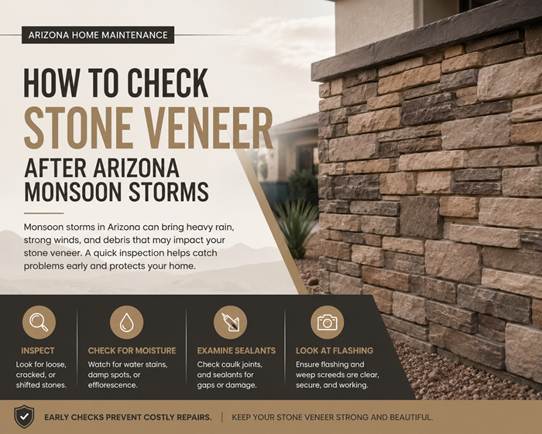
Arizona monsoon storms arrive with hard rain, blowing dust and sudden wind. The official season runs from June 15 through September 30, which makes August a sensible time to look over exterior masonry before small concerns become harder to trace. Stone veneer is durable, but it is still part of a complete wall system. The visible stone, mortar, flashing and drainage details all have to work together.
Begin With a Slow Visual Inspection
Walk around the property in daylight after the wall has dried. Look for stones that appear tilted, loose or separated from the mortar. Hairline surface marks are not always serious, but wider cracks, repeated cracking around openings or fresh gaps deserve attention.
Pay particular attention to outside corners, window edges, door surrounds, columns and the places where stone meets stucco, roofing or paving. These transitions collect water and movement differently from the centre of a wall. A problem often appears first where two materials meet.
Do not pull on a questionable stone or try to fill a gap immediately. A quick patch can hide the route water is taking without correcting the cause.
Check the Bottom of the Wall
Manufactured stone veneer is not intended to trap water behind the finished surface. Proper wall construction uses water resistant layers, flashing and drainage paths to direct moisture outward.
Inspect the lower edge of the installation. Soil, mulch, patio additions or landscaping should not block visible drainage points or cover the base of the wall. Also look for mud lines, mineral deposits or staining that begins close to grade. These clues may show that water is repeatedly splashing against the surface or failing to move away from the building.
If a downspout, roof valley or irrigation head sends water directly toward the veneer, correct that source before cleaning the stain.
Look Above Windows, Doors and Wall Openings
Monsoon rain is often driven sideways by wind. That makes openings especially important. Check for cracked sealant, missing trim, open joints or staining below windows and light fixtures.
The stone itself may not be the source of the problem. Water can enter at an opening above the veneer and become visible farther down. This is why random caulking is rarely a complete answer. The entry point, flashing detail and drainage route need to be understood together.
Darkened drywall, musty smells or interior paint damage on the opposite side of an exterior stone wall should be investigated promptly.
Clean Dust and Splash Marks Carefully
Phoenix area dust can cling to textured stone after rain. Begin with a soft brush and clean water. For stubborn dirt, use a mild cleaner approved by the stone manufacturer and test it in a small hidden area.
Avoid harsh acids, aggressive wire brushes and high pressure washing. Strong cleaning can scar the face of manufactured stone, weaken mortar joints or force water into places it would not normally reach. Cleaning should improve the surface without damaging the wall assembly behind it.
Know When a Mason Should Inspect the Veneer
One loose stone, repeated cracking, bulging sections, rust staining or persistent moisture marks are reasons to request a professional assessment. The same applies when a previous repair keeps reopening.
A qualified installer can determine whether the concern is limited to a small area or connected to the substrate, flashing or drainage system. Catching the issue early may allow a focused repair instead of a larger removal later.
Schedule Stone Veneer Help in Arizona
Diversified Builder Supply has installed residential and commercial stone and brick veneer throughout Phoenix, Chandler, Gilbert, Mesa, Scottsdale, Tucson and surrounding Arizona communities since 1984. For help evaluating an existing wall or planning a properly detailed new installation, call 480 961 3780 to speak with the DBS team and request an estimate.
References
https://www.weather.gov/fgz/monsooninfo
https://www.cmha.org/news-and-insights/water-management-for-masonry-applications/
https://www.cmha.org/resource/msv-tec-001/
https://mountainviewstone.net/blogs/carved-in-stone/stone-veneer-care-and-maintenance-guide